Leveraging land reform and the Expropriation Act to advance food security in South Africa









This article has been supplied and will be available for a limited time only on this website.
By: Ayanda Khumalo - Partner, Nkosinathi Thema, Senior Associate & Kopano Ledwaba, Candidate Attorney at Webber Wentzel
The Constitution guarantees everyone the right to have access to sufficient food and basic nutrition. Complementing this is South Africa's highly productive agricultural sector. Yet, despite these constitutional protections and high agricultural productivity, food insecurity remains a persistent reality for millions of South Africans.
The structural framework underpinning South Africa's food systems is perhaps best described as paradoxical. The country produces sufficient food at a national level, is generally regarded as food secure and, in 2022, was ranked the most food-secure country in sub-Saharan Africa. The agricultural sector is diverse in terms of produce and is a net exporter. However, many households in South Africa remain food insecure, largely due to unaffordability which affects access to sufficient and nutritionally appropriate food. The core issue, therefore, is not that South Africa lacks food availability but rather that many lack access to it; which is the very interest that the Constitution seeks to protect. This issue is exacerbated by chronic unemployment and economic inequalities and is certainly not helped by the historically skewed patterns of productive land ownership in South Africa and the ailing land reform process.
In 2022, the Pan African Parliament adopted the Model Law on Food and Nutrition Security in Africa (PAP Model Law). The PAP Model Law seeks to guide African states in the development of legislative frameworks aimed at safeguarding and advancing food security. One of the elements addressed in the PAP Model Law is the issue of land reform as a mechanism to achieve the purpose sought. For its part, South Africa has adopted various policies to ensure food security. These include the National Food and Nutrition Security Plan 2018-2023 (the Policy), which recognised that food security extends beyond agricultural production and includes nutrition, healthcare, social protection and economic participation. The ailing process of land reform was flagged in the Policy as one of the issues that requires attention to ensure its success. Implementation of this plan has unfortunately failed, and a new plan is in the works. Below, we consider land reform and related issues more closely as a mechanism to ensure food security.
Land reform
South Africa's Constitution, in section 25, commits the country to the process of land reform, aimed at undoing past injustices of land dispossession. More than being a matter of constitutional commitment and an issue of restorative justice, the land reform process also presents an opportunity to safeguard the country's food systems by making available productive land to far more people, who can in turn utilise it for agricultural production, thereby diversifying the currently concentrated sector. This much is acknowledged in the Policy and existing government programmes such as the Comprehensive Agriculture Support Programme (CASP), which provides agricultural support services and development targeted at land reform beneficiaries and other Black producers. This programme has, unfortunately, not yielded recognisable results. Undoubtedly, the issues plaguing land-holding entities such as Communal Property Associations (CPAs) may be to blame. Below, we consider this issue as another mechanism.
Communal Property Associations
CPAs are established under the Communal Property Associations Act and are used as land-holding entities for resituated land. CPAs are meant to enable effective management of resituated land and equitable and equal enjoyment of the benefits deriving from such land. Unfortunately, many land reform beneficiaries falling under CPAs have been unable to derive meaningful benefits and productive value from their resituated land. Some reasons for this are the difficulties experienced by many CPAs. CPAs are often plagued by governance disputes, administrative failures, inadequate institutional support and capacity constraints, which have undermined the productive use of resituated land. Resolving CPA governance challenges, strengthening post-settlement support and accelerating the finalisation of land claims could significantly contribute towards a more equitable and resilient food system. Another mechanism, covered below, is land redistribution for agricultural purposes using the Expropriation Act.
The Expropriation Act
The Expropriation Act permits expropriation of land for a public purpose or in the public interest and, in appropriate circumstances, for nil compensation. This is permitted by the Constitution. Expropriation is often used for public infrastructure purposes. Food security and agrarian reform are surely also issues falling within the categories of "public purpose" or "public interest". Where land is unutilised, abandoned, held solely for speculative purposes or otherwise falls within the other circumstances contemplated by the Act, the state could arguably expropriate that land, even on a temporary basis, for redistribution to willing and capable parties who can use it to support the country's food production.
Solving South Africa's food insecurity issue requires a multimodal approach. The country already produces sufficient food for its population but is export orientated. The central challenge remains ensuring that people possess the means, opportunities, and productive resources necessary to access food consistently and with dignity. A more integrated approach that combines effective and accelerated land reform, strengthened CPAs and the strategic use of expropriation powers may provide a more effective pathway towards both food security and, ultimately, food sovereignty, which contemplates far-reaching control over the country's food systems. South Africa has the potential to move closer to fulfilling the constitutional promise that no person should go hungry in a country capable of feeding itself.
Article Enquiry
Email Article
Save Article
Feedback
To advertise email advertising@creamermedia.co.za or click here
Projects

Latest Multimedia

Latest News


Showroom
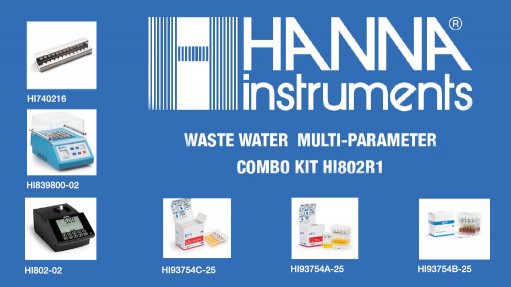
We supply customers with practical affordable solutions for their testing needs. Our products include benchtop, portable, in-line process control...
VISIT SHOWROOM
SafeQuip is a leading distributor and manufacturer of fire safety solutions, offering a comprehensive range of products designed to meet all...
VISIT SHOWROOM


Press Office
Announcements
What's On
Subscribe to improve your user experience...
Option 1 (equivalent of R125 a month):
Receive a weekly copy of Creamer Media's Engineering News & Mining Weekly magazine
(print copy for those in South Africa and e-magazine for those outside of South Africa)
Receive daily email newsletters
Access to full search results
Access archive of magazine back copies
Access to Projects in Progress
Access to ONE Research Report of your choice in PDF format
Option 2 (equivalent of R375 a month):
All benefits from Option 1
PLUS
Access to Creamer Media's Research Channel Africa for ALL Research Reports, in PDF format, on various industrial and mining sectors
including Electricity; Water; Energy Transition; Hydrogen; Roads, Rail and Ports; Coal; Gold; Platinum; Battery Metals; etc.
Already a subscriber?
Forgotten your password?
Receive weekly copy of Creamer Media's Engineering News & Mining Weekly magazine (print copy for those in South Africa and e-magazine for those outside of South Africa)
➕
Recieve daily email newsletters
➕
Access to full search results
➕
Access archive of magazine back copies
➕
Access to Projects in Progress
➕
Access to ONE Research Report of your choice in PDF format
RESEARCH CHANNEL AFRICA
R4500 (equivalent of R375 a month)
SUBSCRIBEAll benefits from Option 1
➕
Access to Creamer Media's Research Channel Africa for ALL Research Reports on various industrial and mining sectors, in PDF format, including on:
Electricity
➕
Water
➕
Energy Transition
➕
Hydrogen
➕
Roads, Rail and Ports
➕
Coal
➕
Gold
➕
Platinum
➕
Battery Metals
➕
etc.
Receive all benefits from Option 1 or Option 2 delivered to numerous people at your company
➕
Multiple User names and Passwords for simultaneous log-ins
➕
Intranet integration access to all in your organisation